Social Media Marketing: Overview and Essentials
Social Media Marketing (SMM) is one of the most dynamic and interactive forms of digital marketing. It focuses on building brand awareness, engagement, and loyalty through platforms like Facebook, Instagram, Twitter (X), LinkedIn, TikTok, and more. Through both organic and paid strategies, businesses can connect with their target audience in real time, build relationships, and drive conversions. Video content, including reels and short-form clips, continues to drive engagement across platforms. For a foundational overview, see the Introduction to Social Media Marketing.
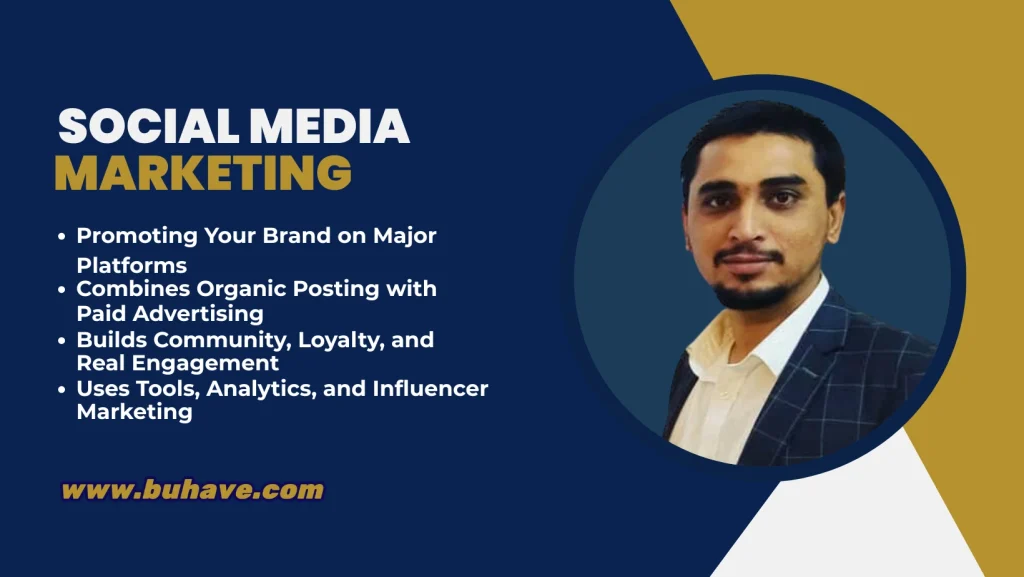
1. Promoting Your Brand on Major Platforms
SMM allows businesses to reach audiences on the platforms they use daily. Each platform has unique features, user behaviors, and content formats that marketers can leverage for brand growth. For platform-specific tactics, see the Platform-Specific Strategies.
- Facebook: Great for ads, community building, and groups
- Instagram: Ideal for visual storytelling, reels, and influencer marketing
- LinkedIn: Best for B2B branding, networking, and lead generation
- Twitter (X): Real-time updates, trends, and conversations
- TikTok: Short-form videos and viral content for younger audiences
2. Combines Organic Posting with Paid Advertising
SMM includes both organic efforts (like regular posts, stories, and community replies) and paid strategies (sponsored posts, boosted content, ad campaigns). A balanced mix creates a powerful impact. For a step-by-step approach, consider the Social Media Marketing Strategy and Campaigns course.
Organic Marketing Includes:
- Sharing content, images, videos, reels, and live sessions
- Replying to comments, messages, and mentions
- Building long-term trust and engagement
Paid Advertising Includes:
- Running ad campaigns with custom targeting
- Boosting high-performing posts to a wider audience
- Using retargeting ads to convert warm leads
3. Builds Community, Loyalty, and Real Engagement
Social media allows two-way communication, giving customers a chance to connect directly with your brand. This leads to stronger brand loyalty, higher engagement, and deeper trust.
For a structured foundation, see Setting the Foundation for Social Media Marketing.
- Encourages user-generated content (UGC)
- Promotes direct feedback, reviews, and discussions
- Creates brand advocates and loyal followers
4. Uses Tools, Analytics, and Influencer Marketing
SMM isn’t just about posting content — it’s about strategy and insights. Various tools help manage content, track performance, and collaborate with influencers to reach broader audiences.
- Scheduling Tools: Buffer, Hootsuite, Meta Business Suite for planning posts
- Analytics: Track engagement, reach, impressions, and ROI
- Influencer Marketing: Collaborate with trusted personalities to boost visibility
- Social Listening: Monitor brand mentions and customer sentiment
Integrating Content Marketing principles helps ensure consistency across channels. Learn more in the Content Marketing course.
In summary, a well-rounded Social Media Marketing strategy blends platform-specific tactics, a balanced mix of organic and paid efforts, and active community management, all guided by analytics. For a structured learning path, explore the Introduction to Social Media Marketing and the Social Media Marketing Strategy and Campaigns course.