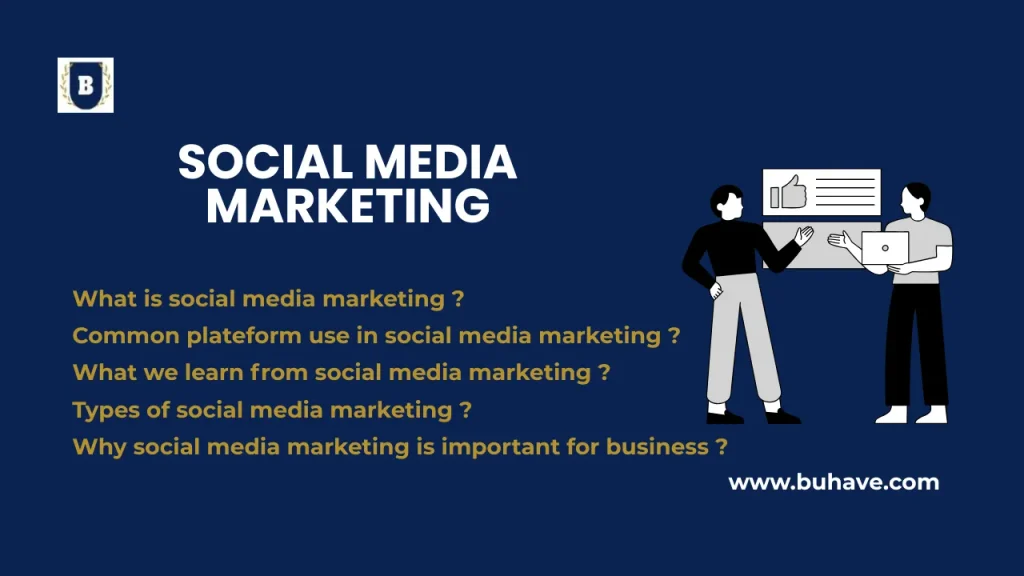
What is Social Media Marketing?
Social media marketing is the process of using platforms like Facebook, Instagram, Twitter, and LinkedIn to promote a brand, product, or service. It helps businesses connect with their audience, create brand awareness, increase sales, and drive website traffic using attractive content and paid advertisements.
For a structured learning path, consider the Social Media Marketing (SMM) course.
Common Platforms Used in Social Media Marketing
1. Facebook
Users: More than 2.9 billion monthly users
Best for: Brand awareness, customer engagement, lead generation
Features: Page, Group, Facebook Ads, Live Video, Messenger
Marketing Use: Businesses create pages to post content, run targeted ads, and engage followers. Facebook Ads allow deep targeting based on interest, location, and behavior.
2. Instagram
Users: Over 2 billion monthly users
Best for: Visual content, brand promotion, creative marketing
Features: Stories, Reels, Posts, IGTV, Shopping
Marketing Use: Great for product visuals, high-quality media, and influencer collaborations to expand reach.
3. Twitter (now X)
Users: Over 500 million users
Best for: News updates, customer service, trending topics
Features: Tweets, Threads, Hashtags, Topics
Marketing Use: Brands use X for real-time updates, trend engagement, and customer support. Hashtags help widen audience reach.
4. LinkedIn
Users: Over 950 million professionals
Best for: B2B marketing, professional networking, recruitment
Features: Company pages, Articles, Job Posts, LinkedIn Ads
Marketing Use: Effective for reaching decision-makers, sharing insights, B2B leads, and personal branding.
5. YouTube
Users: Over 2.5 billion monthly users
Best for: Long-form videos, tutorials, product demos
Features: Channels, Shorts, Ads, Live Streaming
Marketing Use: Useful for publishing explainer videos, ads, and customer testimonials. YouTube is the second-largest search engine.
6. TikTok
Users: Over 1.5 billion users
Best for: Short-form viral content, Gen Z engagement
Features: Short videos, Effects, Duets, TikTok Ads
Marketing Use: Brands create fun, viral content and use influencer partnerships to increase reach.
7. Pinterest
Users: Over 450 million users
Best for: Product discovery, lifestyle, DIY
Features: Pins, Boards, Pinterest Ads
Marketing Use: Ideal for fashion, food, home décor, and beauty. Great for converting viewers into buyers.
8. Snapchat
Users: Over 500 million users
Best for: Real-time content, younger audiences
Features: Snaps, Stories, Lenses, Filters, Ads
Marketing Use: Brands connect with Gen Z using fun filters and behind-the-scenes content.
9. WhatsApp Business
Users: Over 2 billion users
Best for: Direct communication, customer support
Features: Business profiles, Catalogs, Auto-replies
Marketing Use: Enables direct chats, updates, and product sharing with customers.
What We Learn from Social Media Marketing
- Understanding your audience using analytics.
- Building engaging content for each platform.
- Interacting and communicating with followers.
- Running paid ads and managing budgets effectively.
- Tracking performance to improve strategies.
- Building a strong, consistent brand image.
- Creating and executing strategic content calendars.
- Adapting to new trends and tools.
- Working with influencers for extended reach.
- Using platforms for customer support and loyalty.
For platform-focused guidance, see Platform-Specific Strategies.
Types of Social Media Marketing
1. Content Marketing
Explanation: Sharing informative and engaging content.
Examples: Blog posts, Instagram carousels, how-to videos
Benefit: Builds trust and attracts loyal followers.
For foundational steps, see the Setting the Foundation course.
2. Influencer Marketing
Explanation: Partnering with influencers to promote products.
Examples: Sponsored YouTube reviews, Instagram collabs
Benefit: Expands reach and enhances credibility.
3. Paid Advertising
Explanation: Running targeted ads on social platforms.
Examples: Instagram story ads, LinkedIn job promotions
Benefit: Drives fast results and increases visibility.
4. Video Marketing
Explanation: Using videos to educate and promote.
Examples: YouTube tutorials, TikTok clips, Reels
Benefit: Boosts engagement and conversion.
5. Social Media Management
Explanation: Planning and managing posts and engagement.
Examples: Scheduled posts, replying to comments
Benefit: Keeps audience active and builds brand image.
6. Affiliate Marketing
Explanation: Promoting other brands and earning commission.
Examples: Instagram product links, blog promotions
Benefit: Generates passive income without own product.
7. User-Generated Content (UGC)
Explanation: Encouraging customers to create content.
Examples: Sharing user photos and testimonials
Benefit: Builds trust and provides social proof.
8. Community Building & Engagement
Explanation: Building a loyal and interactive audience.
Examples: Facebook Groups, polls, Q&A sessions
Benefit: Builds loyalty and personal connection.
9. Social Listening & Reputation Management
Explanation: Monitoring and responding to brand mentions.
Examples: Tracking hashtags, replying to reviews
Benefit: Protects brand image and improves experience.
10. Event Promotion & Live Streaming
Explanation: Promoting and hosting events online.
Examples: Instagram Lives, webinars, countdowns
Benefit: Increases real-time engagement.
11. Messenger & Chatbot Marketing
Explanation: Using messaging apps to engage directly.
Examples: Automated replies, personalized offers
Benefit: Enhances service and real-time interaction.
Why is Social Media Marketing Important for Businesses?
- Brand Awareness: Increases visibility and recognition.
- Customer Engagement: Builds trust through interaction.
- Cost-Effective: Low-cost platforms and affordable ads.
- Targeted Advertising: Reaches the right audience.
- Sales Growth: Converts followers into buyers.
- Customer Support: Fast help through messaging features.
- Market Feedback: Insights for improving products.
- Brand Authority: Share expertise and build trust.
For deeper strategy and measurement, see Analytics & optimization.
How Businesses Use Social Media Marketing
| Task | Description |
|---|---|
| Running Ads | Paid promotions to target specific customers |
| Influencer Collaborations | Partnering with social media personalities |
| Customer Interaction | Responding to messages, comments, and reviews |
| Analyzing Performance | Tracking metrics like likes, reach, conversions |
| Promotions & Giveaways | Contests and discounts to engage customers |
| Content Posting | Sharing posts, images, and updates regularly |
| Using Stories/Reels | Quick, visual, and engaging short-form content |
Benefits Summary
- Reach targeted audience
- Real-time communication
- Improve brand loyalty
- Boost sales & ROI
- Increase brand visibility
Example
If you own a handmade jewelry business:
- You post daily product photos on Instagram.
- You run Facebook ads targeting women aged 18–35 in your city.
- You collaborate with an influencer to promote your brand.
- You reply to customers via WhatsApp Business.
- You analyze which content performs best and focus on that.
Result: More followers, more website visits, and higher sales.
Explore more topics on social media marketing