On-Page SEO:
On-page SEO is the practice of optimizing individual web pages to improve their rankings and attract more relevant traffic from search engines. As search engines increasingly emphasize user intent and experience, on-page signals—such as content quality, HTML structure, and semantic relevance—remain foundational, complementing off-page factors like backlinks, as highlighted in our Introduction to SEO guide.
Here’s a detailed breakdown of the key on-page SEO factors:
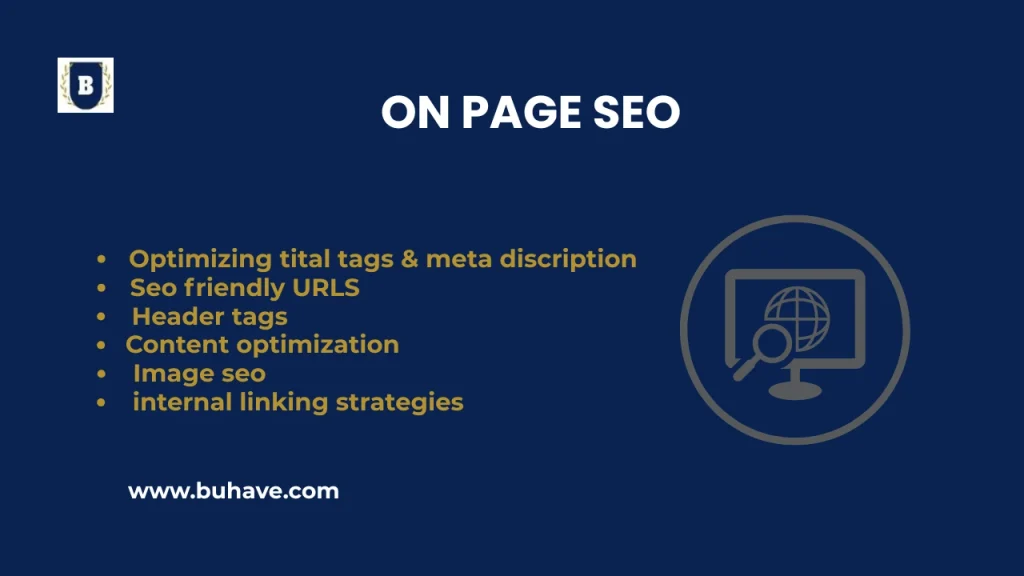
1. Optimizing Title Tags & Meta Descriptions
- Title Tags are the clickable headlines in search results. Aim for under 60 characters, front-load the main keyword, and maintain clear value for users.
- Meta Descriptions appear under titles. While they aren’t a direct ranking factor, a compelling description can improve CTR. Keep under 160 characters and include a clear callout to the page’s value.
Example:
<title>Best Digital Marketing Tips for Small Businesses | YourBrand</title>
<meta name="description" content="Explore the top digital marketing strategies to grow your small business online. Learn SEO, social media, PPC, and more.">
For a broader look at optimization strategies, you can explore our Search Engine Optimization course.
2. SEO-Friendly URLs
- Keep URLs short, clean, and keyword-rich.
- Avoid special characters or numbers.
- Use hyphens (-) to separate words.
Example:
- Good:
www.example.com/seo-tips - Bad:
www.example.com/page?id=123
3. Header Tags (H1, H2, H3…)
- Use one
H1tag per page for the main title. - Break content using
H2andH3tags for better readability and SEO. - Include keywords where relevant in headers.
4. Content Optimization
- Ensure content is original, valuable, and answers user intent.
- Use primary and related (LSI) keywords naturally.
- Break text into short paragraphs and use bullet points.
- Add examples, stats, FAQs, and internal links to improve quality.
For practical strategies on internal linking, see our Link Building and Off Page SEO guide.
5. Image SEO
- Use high-quality images that support your content.
- Add descriptive
ALTtext with relevant keywords. - Compress image size for faster loading.
- Rename image files clearly (e.g.,
on-page-seo-guide.jpg).
6. Internal Linking Strategies
- Link to relevant internal pages using keyword-rich anchor text.
- Help users explore more content and keep them longer on your site.
- Support search engine crawling and site structure.
For best practices on internal link strategies, check out our Link Building and Off Page SEO course.
7. User Experience (UX) & Engagement
- Ensure fast page load times and mobile responsiveness.
- Use intuitive navigation, readable fonts, and clean layouts.
- Add strong calls to action (CTAs) to guide users.
- Engaging content helps reduce bounce rate and increase retention.
Prioritize Core Web Vitals and Page Experience signals; for deeper technical guidance, see our Technical SEO and Site Performance course.
8. Important On-Page Metrics to Monitor
- Bounce Rate: Percentage of users who leave after viewing one page.
- Dwell Time: Time a user spends on your page before returning to search results.
- Click-Through Rate (CTR): How often users click your link in SERPs.
- Page Speed: Slow pages reduce rankings and user satisfaction. This also ties into Core Web Vitals (LCP, FID, CLS) as used by Google.
- Mobile Usability: Ensure full mobile optimization.
For metadata and head element optimization tips, see Metadata and Head Elements.
Conclusion
On-page SEO remains the foundation of modern SEO strategies. By continuously optimizing title tags, content, images, and internal links, and by prioritizing user experience, you can maintain and improve rankings while delivering real value to visitors. As search engines evolve, ongoing refinement—guided by current best practices and industry insights from resources like our Introduction to SEO course—helps sustain results.
When done right, on-page SEO not only improves visibility but also builds trust, drives conversions, and increases overall site performance. Regular audits and updates ensure you stay aligned with the latest ranking factors and user expectations.