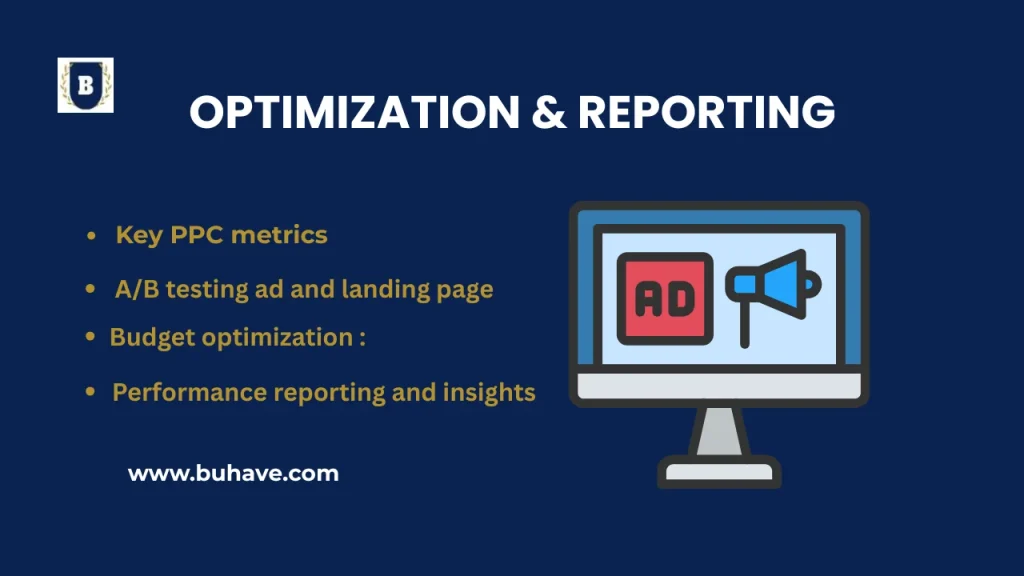
Optimization & Reporting helps maximize ad performance and ROI by analyzing data, refining strategies, and making informed campaign decisions. This approach is explored in depth in our Optimization & Reporting course.
For a broader background in PPC concepts, see the Introduction to PPC course.
Key PPC Metrics Explained
1. CTR (Click-Through Rate)
Formula: CTR = (Clicks ÷ Impressions) × 100
CTR measures how often people click your ad after seeing it. A high CTR means your ad is relevant and attractive to users.
Why It Matters: High CTR improves your Quality Score, lowers CPC, and boosts Ad Rank.
2. CPC (Cost Per Click)
Formula: CPC = Total Cost ÷ Total Clicks
It shows how much you pay each time someone clicks your ad. It can vary depending on competition, quality score, and bid strategy.
Why It Matters: Lower CPC means more traffic within your budget.
3. CPA (Cost Per Acquisition)
Formula: CPA = Total Cost ÷ Total Conversions
CPA tells you how much you’re spending to get a conversion like a sale or sign-up.
Why It Matters: It’s critical for ROI-focused campaigns.
4. ROAS (Return on Ad Spend)
Formula: ROAS = Revenue from Ads ÷ Cost of Ads
ROAS tells you how much revenue you earn for every dollar spent on ads.
Why It Matters: It helps measure profitability, especially for e-commerce.
A/B Testing Ads and Landing Pages
What is A/B Testing?
A/B testing compares two or more ad or landing page versions to find what works best for CTR, CPA, or ROAS.
For a broader background in PPC concepts, see the Introduction to PPC course.
Why Test?
- Improve CTR with better headlines
- Boost conversion rates with optimized layouts
- Lower CPC/CPA over time
- Make data-driven decisions
Testing Ads in Google Ads
- Headlines: Try different offers or CTAs
- Descriptions: Adjust tone or benefits
- Display Paths: Add keywords or clarity
- Calls-to-Action: Compare different phrases
- Ad Extensions: Test sitelinks or callouts
For a structured approach to optimization, see our Optimization & Reporting course.
Set Up Methods
- Responsive Search Ads (RSAs): Add multiple headlines/descriptions and let Google optimize.
- Manual Testing: Create multiple ads in a group and analyze performance evenly.
Measure:
- CTR
- Conversion Rate
- CPA / ROAS
- Quality Score
Landing Page Testing Areas:
- Headline
- CTA (text, size, color)
- Media (images, videos)
- Form fields
- Page layout and offers
Tools to Use:
- Google Optimize (legacy)
- Unbounce, Instapage, Webflow
- Google Ads Experiments
For deeper analytics insights, see our Analytics and Optimization resource.
Budget Optimization
Budget optimization is the process of allocating ad spend to maximize ROI or ROAS.
Steps to Optimize:
- Set Clear Goals: Clicks, Conversions, ROAS, or Awareness
- Strategic Campaign Structure: Group by goal or product
- Shared Budgets: Distribute across campaigns efficiently
- Prioritize Performers: Increase budget for high-ROAS campaigns
- Schedule Ads: Show ads when performance is highest
- Geo Targeting: Focus on locations with better ROI
- Smart Bidding: Use Maximize Conversions or Target ROAS (with enough data)
- Avoid Capping: Don’t let top campaigns run out of budget early
- Test & Reinvent: Constantly improve based on data
- Review Recommendations: Use Google’s suggestions wisely
Tools:
- Google Ads Campaign Budget Report
- Google Analytics
- Data Studio Dashboards
Learn how to align your budget with your goals by exploring our Goals and Conversion Tracking course.
Performance Reporting & Insights
Performance reporting helps you track success, fix weaknesses, and optimize strategy through data analysis.
Core Metrics to Monitor:
- Impressions
- Clicks
- CTR, CPC, CPA, ROAS
- Conversions & Conversion Rate
Behavioral Metrics (Google Analytics):
- Bounce Rate
- Time on Site
- Pages per Session
- New vs Returning Visitors
Types of Reports:
- Google Ads Overview: Campaign, ad group, keyword stats
- Google Analytics: Tracks user behavior after clicking ads
- Search Terms: Shows actual search queries triggering ads
- Auction Insights: Competitive visibility data
- Custom Dashboards: Via Looker Studio for deep analysis
Best Reporting Practices:
- Segment by device, location, and time
- Compare time periods (WoW, MoM, YoY)
- Focus on insights, not just numbers
- Track against original goals
- Use visuals and automated reports
For a structured learning path on reporting and optimization, see our Introduction to PPC and Optimization & Reporting courses.
Summary Checklist
| Task | Purpose |
|---|---|
| Set Clear Goals | Know what you’re optimizing for |
| Monitor Core Metrics | CTR, CPC, CPA, ROAS |
| Analyze Segments | Find patterns in performance |
| Track Conversions | Measure true success |
| Use Looker Dashboards | Clear, visual data presentation |
| Optimize Based on Insights | Improve performance intelligently |